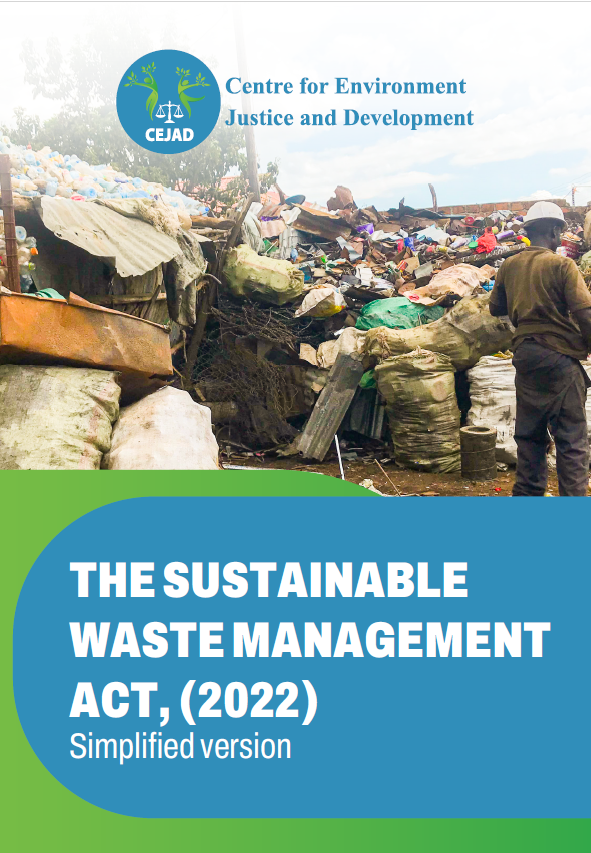

The Simplified Sustainable Waste Management Act, 2022, provides an easy-to-understand overview of Kenya’s legal framework for sustainable waste management. It covers the main principles, duties, and actions needed to ensure proper waste handling and safeguard the environment.
In Kenya, each person generates an average of 0.5 kilograms of waste per day, amounting to more than 25,000 tonnes daily nationwide. Rapid urbanisation and population growth have increased waste generation, placing pressure on counties and institutions responsible for waste management. Poor waste handling contributes to environmental pollution, climate change, and public health risks.
The Sustainable Waste Management Act, 2022, was enacted to address these challenges and support the constitutional right to a clean and healthy environment under Article 42 of the Constitution of Kenya. The Act establishes a legal and institutional framework that guides how waste should be generated, segregated, collected, transported, recycled, and disposed of across the country.
The Act encourages a shift from the traditional “make-use-and-throw” model to a circular economy model, where waste is minimised, reused, recycled, and regarded as a valuable resource. It also introduces Extended Producer Responsibility (EPR), which requires producers to assume responsibility for the waste generated by their products and packaging.
This simplified guide highlights the key provisions of the law, including:
- The main sources of waste in Kenya
- Guiding principles and objectives of sustainable waste management
- The waste flow system, from generation to final disposal
- The roles and responsibilities of government institutions, private sector actors, waste service providers, and citizens
- Enforcement mechanisms and penalties for non-compliance
- Financial provisions, public participation, and access to waste information
Waste management is a shared responsibility that demands cooperation among national and local governments, businesses, communities, and individuals. By adhering to the principles outlined in this Act, Kenya can reduce pollution, generate green jobs, bolster the circular economy, and safeguard the environment for both present and future generations.
Download the full PDF to read the complete guide.
Note: This publication is a simplified version intended for public awareness and education. For full legal provisions and obligations, please refer to the official Sustainable Waste Management Act, 2022.
Featured Download On